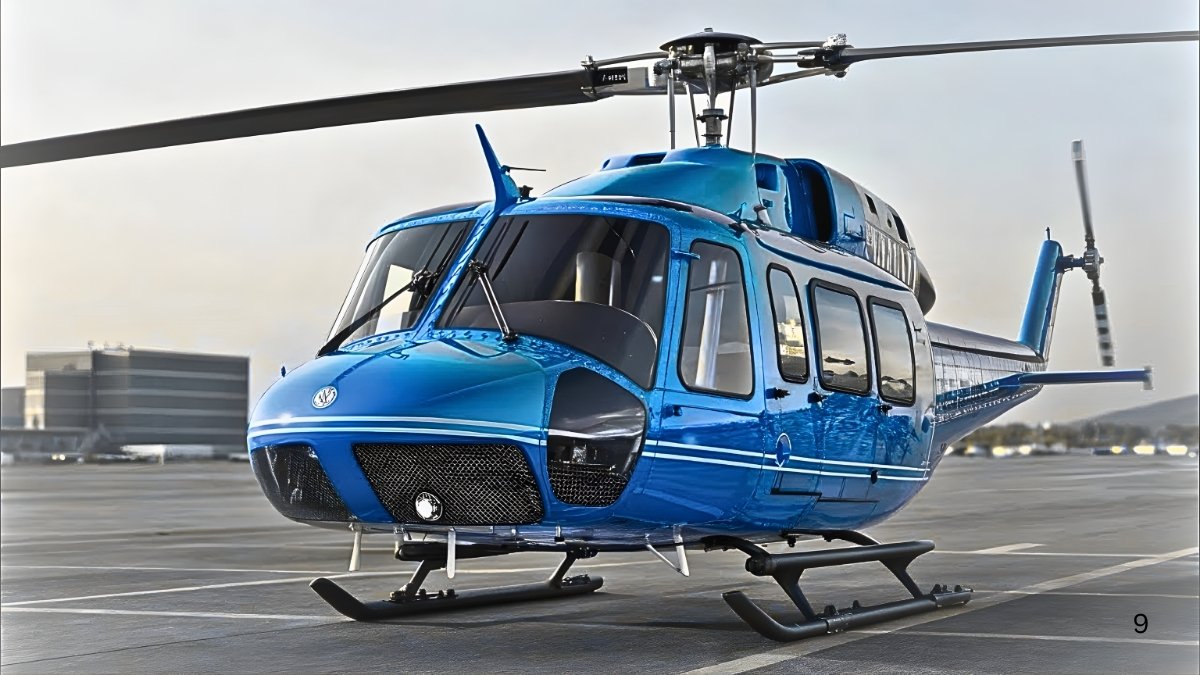
Bell 212 Helicopter Review:The Bell 212 helicopter has earned a lasting reputation as one of the most dependable twin-engine helicopters ever produced. Developed as an evolution of the Bell 205, it combines proven design principles with enhanced safety and performance. Even decades after its introduction, the Bell 212 continues to serve in demanding environments around the world, from mountainous rescue missions to offshore transport and military operations. This review takes a closer look at what makes the Bell 212 a respected and still-relevant aircraft in modern aviation.
Design and Airframe
The Bell 212 features a classic utility helicopter design that prioritizes strength, balance, and simplicity. Its semi-monocoque fuselage is built to withstand harsh operating conditions while remaining easy to inspect and repair. The wide cabin layout allows flexible seating arrangements or cargo configurations, making it suitable for a wide range of missions.
One of the most appreciated design aspects is the helicopter’s two-blade main rotor system. While simple by modern standards, it delivers predictable handling and robust performance. The airframe has proven itself in extreme climates, including high-altitude regions, deserts, and cold offshore environments.
Powerplant and Performance
At the heart of the Bell 212 are twin Pratt & Whitney PT6T Twin-Pac engines. This configuration provides redundancy and increased safety, especially during operations over water or rugged terrain. In the event of an engine issue, the remaining powerplant can maintain controlled flight, a key advantage over single-engine helicopters.

The Bell 212 offers respectable cruising speed and solid lift capability. It performs well in hot-and-high conditions, which has contributed to its popularity with military forces and rescue organizations. While it may not match the speed or fuel efficiency of newer helicopters, its power delivery remains reliable and predictable.
Avionics and Cockpit
Originally equipped with analog instruments, the Bell 212 cockpit reflects the era in which it was designed. However, many operators have upgraded their aircraft with modern avionics packages. These upgrades often include GPS navigation, digital engine monitoring, weather radar, and improved communication systems.
The cockpit layout is pilot-friendly, with excellent outward visibility that supports precision flying during hoist operations, landings in confined areas, and formation flights. The straightforward controls reduce pilot workload, particularly during long missions or challenging weather conditions.

Safety and Reliability
Safety has always been one of the Bell 212’s strongest qualities. The twin-engine configuration significantly reduces operational risk, especially for search and rescue, offshore transport, and military missions. The helicopter’s systems are mechanically simple and well-understood, which contributes to consistent reliability.
Over decades of service, the Bell 212 has built an impressive safety record. Its predictable flight characteristics make it suitable for pilots with varying experience levels, and its rugged construction helps minimize damage during hard landings or operations in rough terrain.
Operational Roles
Few helicopters can match the versatility of the Bell 212. It has been used extensively for troop transport, medical evacuation, firefighting, cargo lifting, and VIP transport. Civil operators value it for utility and firefighting roles, while military forces rely on it for logistics and tactical support.

In offshore operations, the Bell 212 has proven its ability to handle long flights over water with confidence. Rescue agencies continue to trust it for missions where reliability and endurance matter more than cutting-edge technology.
Maintenance and Operating Costs
One of the reasons the Bell 212 remains in service is its manageable maintenance profile. Spare parts are widely available, and many technicians are already familiar with its systems. Routine maintenance tasks are straightforward, reducing downtime and long-term operating costs.
While fuel consumption is higher than some newer models, operators often accept this trade-off in exchange for durability and mission flexibility. For organizations operating in remote areas, the Bell 212’s ease of maintenance is a major advantage.

Comparison and Relevance Today
When compared to modern helicopters, the Bell 212 may appear outdated in terms of avionics and cabin refinement. However, it continues to hold its own in reliability, lifting capability, and operational flexibility. Many operators choose to upgrade existing aircraft rather than replace them, extending service life while improving functionality.
Its continued use around the world proves that a well-designed helicopter does not lose value simply because it is not new. The Bell 212 remains a practical solution for operators who prioritize proven performance over advanced automation.
Key Highlights
The Bell 212 is known for its twin-engine safety and dependable performance. Its rugged airframe handles demanding environments with ease. The helicopter offers versatile mission capability across civil and military roles. Maintenance is straightforward, with good parts availability worldwide. Even today, it remains a trusted workhorse in global aviation.

Final Words
The Bell 212 helicopter stands as a testament to durable engineering and practical design. While newer aircraft offer advanced technology and improved efficiency, few can match the Bell 212’s proven track record. For operators who value reliability, versatility, and long-term serviceability, the Bell 212 continues to be a smart and respected choice. Its legacy is not just rooted in history but reinforced every day it takes to the skies on missions that demand trust and performance.