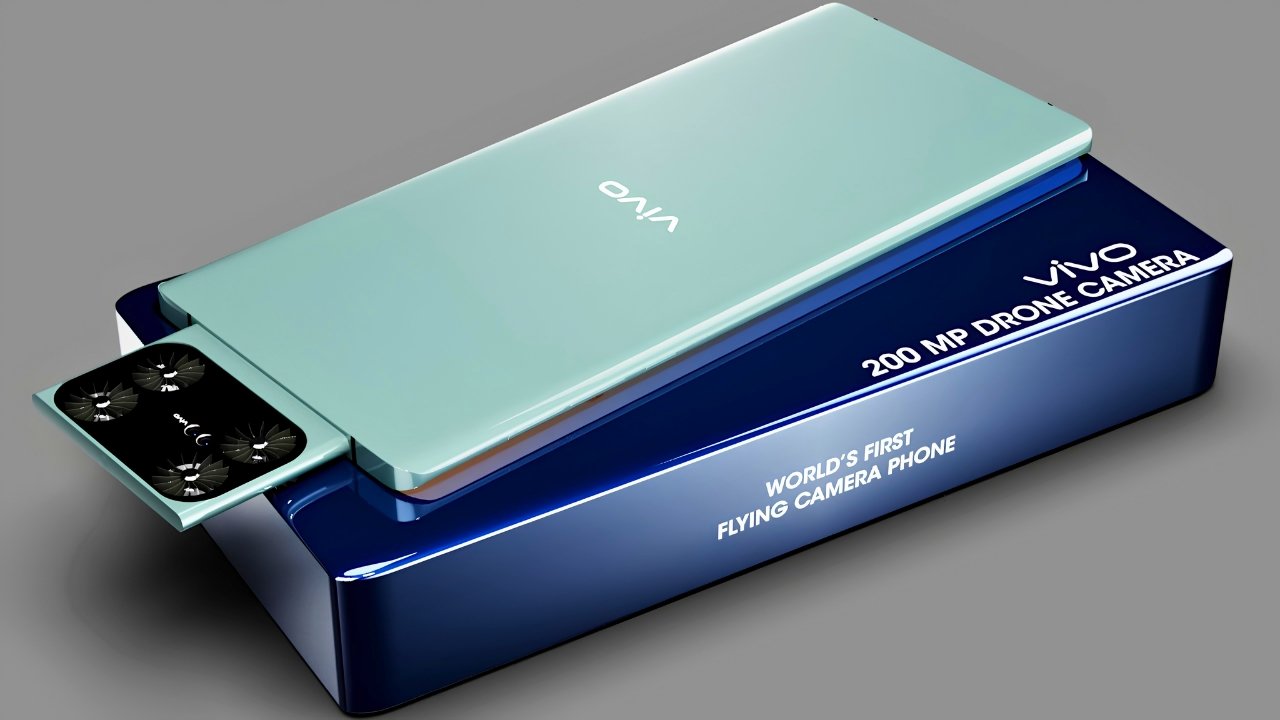
Vivo Flying Camera Phone 2026 The Vivo Flying Camera Phone 2026 represents one of the most futuristic concepts in smartphone innovation, pushing the boundaries of mobile photography and design. As technology continues to evolve at a rapid pace, smartphone manufacturers are exploring ideas that once felt impossible. Vivo’s concept of a flying camera system is a bold step toward redefining how users capture photos and videos in everyday life.
This device is imagined not just as a smartphone but as a multi-functional imaging tool that combines advanced AI, high-resolution sensors, and drone-like camera capabilities. With a powerful 200MP main sensor and detachable flying camera module, it aims to deliver unmatched flexibility in photography and videography.
Futuristic Design and Build Concept
The design of the Vivo Flying Camera Phone 2026 is expected to reflect a perfect blend of elegance and innovation. The main device follows a sleek and minimalistic design language with a large edge-to-edge display and ultra-thin bezels. The body is crafted using lightweight aerospace-grade materials, making it both durable and easy to handle.
The most unique aspect of the design is the integrated flying camera module. This detachable unit is housed within the smartphone and can be launched into the air when needed. It is designed to hover and capture images or videos from different angles, controlled directly from the phone.
The overall aesthetic of the device focuses on futuristic appeal, with smooth curves, hidden sensors, and a premium glass-metal finish that enhances its flagship identity.
Flying Camera Technology Explained
The highlight of this concept phone is its flying camera system. Unlike traditional smartphones that rely on fixed camera modules, this device introduces a mini drone-like camera that can detach and fly independently.

This flying camera is expected to use advanced stabilization technology to maintain steady shots even in windy or dynamic environments. It can follow subjects automatically using AI tracking or be manually controlled through the smartphone interface.
The idea behind this technology is to provide users with creative freedom, allowing them to capture aerial shots, dynamic selfies, and cinematic videos without needing an external drone. This innovation could completely change how social media content is created.
200MP Camera Power and Imaging Capabilities
At the core of the Vivo Flying Camera Phone 2026 is a powerful 200MP primary sensor designed to deliver ultra-high-resolution images. This sensor allows users to capture extremely detailed photos with sharp clarity, even when zoomed or cropped.
The camera system is expected to include advanced features such as optical image stabilization, AI scene detection, night mode enhancement, and HDR optimization. These technologies work together to produce professional-quality images in all lighting conditions.
The flying camera module also carries high-resolution sensors, ensuring that aerial shots maintain the same level of clarity and color accuracy as the main camera system. This combination of ground and aerial photography creates a unique dual-layer imaging experience.

AI Integration and Smart Features
Artificial intelligence plays a major role in the functionality of the Vivo Flying Camera Phone 2026. The device is designed to learn user behavior and automatically adjust camera settings for optimal results.
AI-based subject tracking allows the flying camera to follow people, animals, or objects with precision. It can also predict movement and adjust its position to maintain perfect framing during video recording.
In addition to photography, AI is expected to enhance battery optimization, performance management, and user interface personalization. The phone may also include voice-controlled camera operations, making it easier to capture moments hands-free.
Display and Multimedia Experience
The smartphone is expected to feature a large AMOLED or next-generation micro-LED display with ultra-high resolution and adaptive refresh rate technology. This ensures smooth scrolling, vibrant colors, and deep contrast levels.
The display is designed to offer an immersive viewing experience, making it ideal for watching videos, editing photos, and playing games. With minimal bezels and high screen-to-body ratio, users get a more engaging visual experience.

Combined with advanced stereo speakers and spatial audio technology, the device delivers a cinematic multimedia experience that complements its futuristic design.
Performance and Hardware Power
To support its advanced features, the Vivo Flying Camera Phone 2026 is expected to be powered by a flagship-level processor built on next-generation architecture. This chipset ensures fast performance, efficient multitasking, and smooth handling of AI-based operations.
The phone is likely to come with high RAM capacity and fast internal storage options, allowing users to store large media files and run demanding applications without lag.
The flying camera system also requires strong processing power for real-time image transmission and stabilization, which is handled efficiently by the device’s optimized hardware-software integration.
Battery Life and Charging Technology
Despite its advanced features, the device is expected to include a high-capacity battery designed to support long usage hours. Intelligent power management ensures that energy is distributed efficiently between the main device and the flying camera module.

Fast charging and possibly wireless charging technologies are expected to be part of the package, allowing users to quickly recharge and continue using the device without long interruptions.
The flying camera module may also include its own mini battery system, which recharges automatically when docked inside the phone.
Connectivity and Smart Ecosystem
The Vivo Flying Camera Phone 2026 is expected to support advanced connectivity options such as 5G or even early 6G readiness, ensuring ultra-fast data transfer and real-time streaming capabilities.
Wi-Fi 7 support, Bluetooth 5.4 or higher, and enhanced GPS accuracy are also expected features. These technologies allow seamless communication between the smartphone and flying camera module.
The device may also integrate with smart ecosystems such as smart homes, wearables, and cloud storage platforms, making it a central hub for digital life.

Security and Privacy Features
With such advanced technology, security becomes a major focus. The phone is expected to include multiple biometric authentication methods such as in-display fingerprint scanning and advanced facial recognition.
Encrypted communication between the flying camera and the smartphone ensures that data remains secure during transmission. Users can also control privacy settings to disable camera functions instantly when needed.
AI-based security monitoring may help detect unauthorized access attempts and protect sensitive data stored on the device.
Key Highlights
The Vivo Flying Camera Phone 2026 introduces a revolutionary flying camera system that allows aerial photography directly from a smartphone. Its powerful 200MP main sensor delivers ultra-detailed and professional-quality images.
The device combines AI-driven features with advanced imaging technology for smarter photography and enhanced user experience. Its futuristic design includes a sleek body with an integrated detachable camera module.
A high-performance processor ensures smooth operation of all advanced features, while the immersive display enhances multimedia consumption. The smartphone also supports fast charging and long battery life optimization.
Overall, it represents a major leap in mobile innovation, blending smartphone convenience with drone-like camera capabilities.
Final Words
The Vivo Flying Camera Phone 2026 is a concept that showcases the future direction of smartphone technology. It brings together creativity, engineering, and artificial intelligence to create a device that goes beyond traditional limitations.With its flying camera system, powerful imaging capabilities, and intelligent features, it redefines how users interact with mobile photography. It is not just a phone but a vision of what the future of communication and content creation could look like.