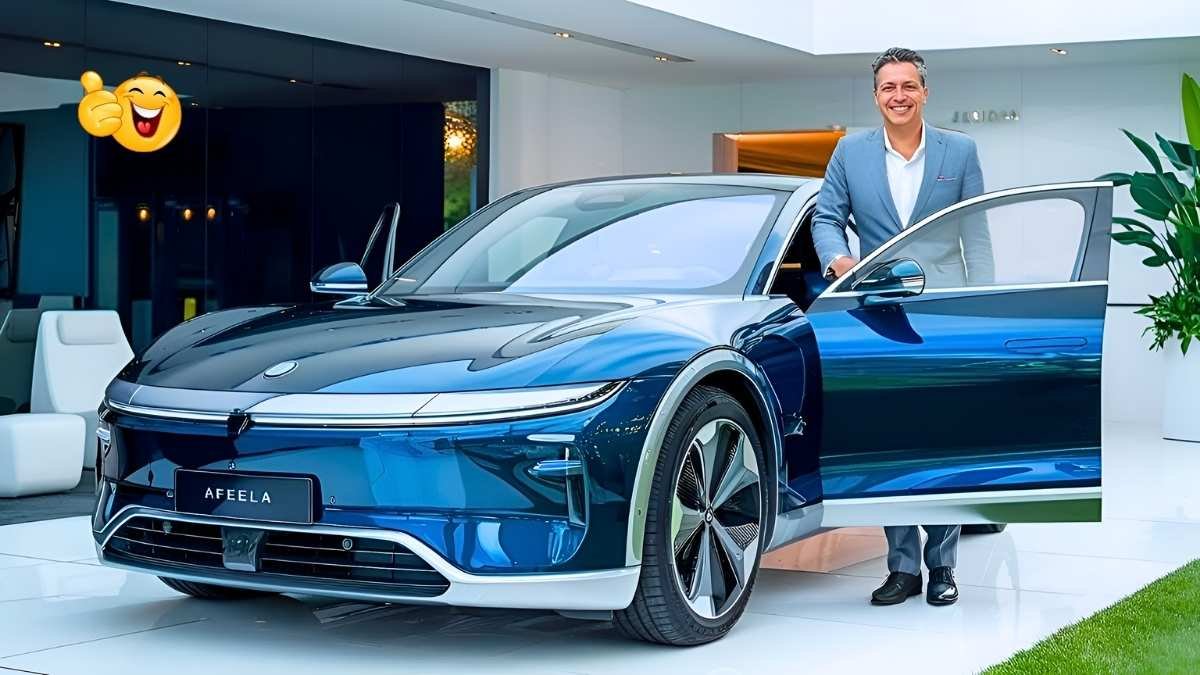
The 2026 Afeela EV Sedan has become one of the most talked-about electric vehicles in recent memory. Born from the partnership between Sony and Honda, Afeela promises to merge automotive engineering with next-level digital intelligence. Ever since its early prototypes appeared on stage, many wondered whether it would truly revolutionize the EV market or simply ride on futuristic buzzwords and concept-car excitement. With the first real look at the production-ready model, it’s now possible to judge whether the Afeela EV Sedan is a genuine breakthrough or just another hyped-up entrant in a crowded electric vehicle landscape.
A New Kind of Collaboration
Afeela stands apart because it is not just another automaker stepping into the EV race. It is a merged vision from Honda’s long automotive history and Sony’s deep expertise in entertainment, sensors and software. This partnership aims to deliver a different type of vehicle experience, one that treats the car as a digital platform rather than only a method of transportation. The goal is to create a machine that interacts, adapts and responds more like a smart device than a traditional car.
This vision is ambitious, but ambition does not always guarantee execution. The first production-ready design gives us hints about how much of this concept will actually reach drivers, and early impressions suggest that Afeela is taking this mission seriously.
Exterior Design Focused on Clean Simplicity
The design philosophy of the 2026 Afeela EV Sedan focuses on minimalism with a futuristic twist. The body language avoids aggressive edges and instead leans on smooth curves and continuous surfaces. The front features a narrow digital display strip capable of showing simple visuals and signals. This element gives the Afeela a distinct identity, making it easy to recognize even from a distance.

The car is neither bulky nor overly sporty. Instead, it carries a calm modern look, targeting drivers who want something sleek and intelligent rather than flashy. Aerodynamics play a major role in the overall silhouette, helping the sedan optimize range and stability while maintaining its clean aesthetic.
Tech-Heavy Interior Designed for Digital Life
Step inside the Afeela, and it immediately becomes clear that Sony’s influence dominates the cabin experience. The interior is built around screens and intuitive interactions. A sprawling digital dashboard stretches almost from door to door, giving the car a futuristic lounge-like feeling. The interface is designed to be closer to a smart TV operating system than a traditional car menu.
The emphasis on comfort and digital immersion is obvious. Afeela aims to offer an environment where passengers can stream content, play games, interact with voice assistants and stay seamlessly connected to their digital ecosystem. While some may see this as an overstep into smartphone territory, others will appreciate the innovative approach to in-car entertainment and functionality.
The seats offer a relaxed, almost minimalist feel, with soft materials and curved surfaces. Lighting plays an important role in setting the tone of the cabin, adjusting based on driving conditions or user preferences. It is clear that Afeela wants to make every drive feel like part of a larger digital experience, not simply a trip from point A to B.
Software Takes Center Stage
What truly distinguishes the Afeela EV Sedan is its dedication to software. Sony and Honda envision a vehicle that receives frequent updates, learning from its environment and enhancing its capabilities over time. The car uses a combination of high-end sensors, cameras and computing systems to understand surroundings and assist the driver.
Early demonstrations have shown the car performing advanced driver-assistance tasks with impressive accuracy, but the real promise lies in long-term evolution. Afeela is built to improve as new features become available, much like a smartphone that gets updated periodically. This approach could set a new standard for the way vehicles operate and age.

Artificial intelligence also plays a role in personalizing the driving experience. The sedan is expected to adapt to user behavior, adjusting climate settings, entertainment preferences and even driving modes based on learned habits. Whether this becomes a useful tool or an unnecessary gimmick will depend on how smoothly the software performs in real-world conditions.
Performance and Range Expectations
While the Afeela sedan focuses heavily on tech, Honda ensures its mechanical performance remains competitive. Early estimates suggest a balanced power output designed for smooth and confident driving rather than aggressive performance. The range is expected to be respectable, appealing to daily commuters and tech-focused drivers who value efficiency.
The suspension setup aims for comfort, maintaining a refined ride suitable for long-distance travel. The overall handling approach appears focused on predictability and stability rather than sporty excitement. This aligns well with the sedan’s target audience, who are more interested in comfort and technology than raw speed.

A Question of Hype or True Innovation
The biggest question surrounding Afeela is whether it is truly a game changer. Its technology-driven approach is undeniably appealing, especially at a time when the automotive world is shifting toward software-heavy designs. The collaboration between Honda and Sony introduces a blend of reliability and innovation rarely seen in the industry.
However, some skepticism remains. The heavy reliance on screens and digital features may be overwhelming for drivers who prefer simpler interfaces. Additionally, the real test will be how these systems perform outside controlled environments. Software-driven vehicles often face challenges in long-term stability, update consistency and user comfort.
Still, the Afeela EV Sedan shows enough promise to stand apart. It reflects a new direction for EVs, one where digital identity plays as big a role as physical engineering. Whether this approach becomes a new standard or remains a niche concept will only be known once the car hits the roads.

Key Highlights
• Clean and futuristic exterior design with a unique digital front display
• Spacious tech-focused cabin with a wide digital dashboard
• Collaboration between Sony and Honda blending automotive strength and software expertise
• Advanced driver-assistance features powered by high-end sensors
• Software-first philosophy with continuous updates and personalization
• Balanced performance aimed at comfort and daily usability
• A forward-looking concept that challenges traditional EV expectations
Final Words
The 2026 Afeela EV Sedan represents a bold step toward the future of digital mobility. It doesn’t try to compete in raw power or aggressive design; instead, it aims to redefine how drivers interact with their vehicles. While some may question whether its features are practical or simply hype-driven, there is no doubt that Afeela introduces fresh ideas into the EV landscape. If its software performs as promised and the user experience remains smooth and intuitive, the Afeela could indeed become a trendsetter. For now, it stands as one of the most intriguing vehicles set to arrive in 2026, offering a glimpse of how the next generation of cars may behave.